
When can babies have Broccoli?
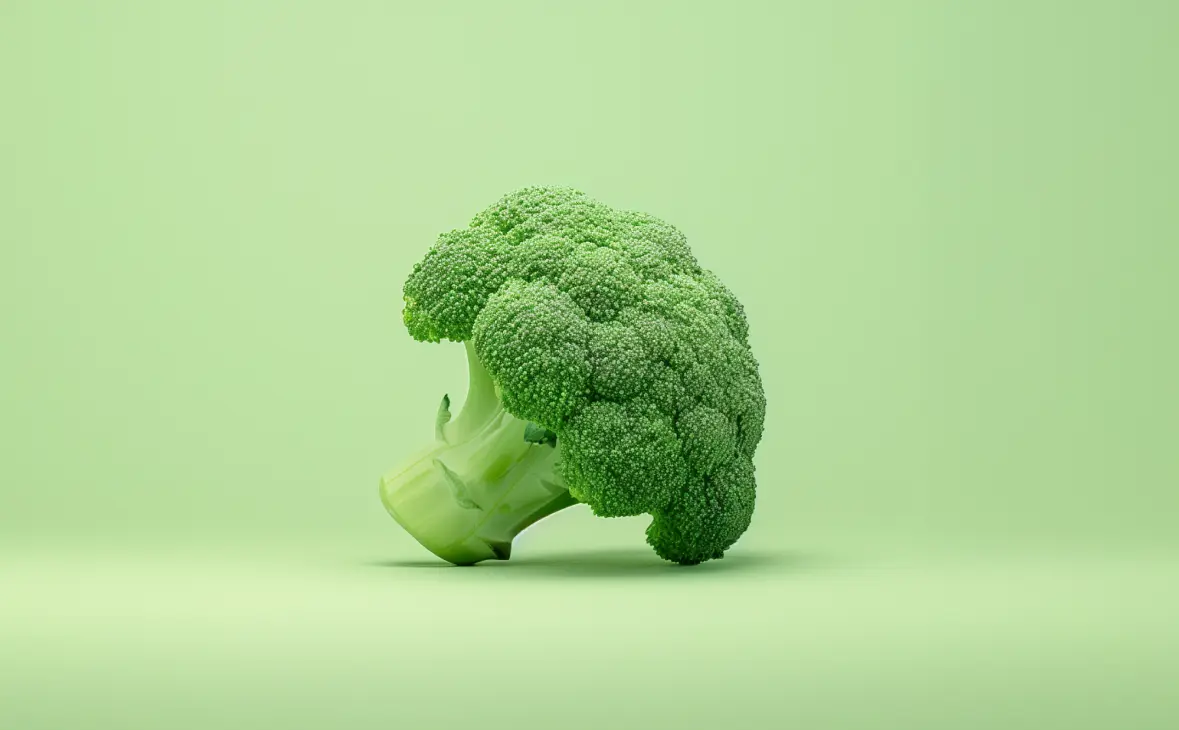
Broccoli can typically be introduced around 6 months. Broccoli is a nutrient-dense vegetable that supports growth and immunity, offering vitamin C, fiber, vitamin K, and small amounts of protein and calcium to help with overall development and digestion.
How to Serve
Textures and portions change as your baby grows. Here's how to serve Broccoli safely at each stage.
6 months
Steam broccoli until florets and stems are very soft and tender. Offer a cooked floret as a BLW spear with a trimmed thick stalk so baby can grasp the stem.
Fully cooked broccoli becomes soft but stems can be slightly fibrous; trim any coarse outer layer so the piece breaks down quickly in the mouth. Watch for excess steam moisture and remove stringy bits from stems that don’t soften.
Offer a small smooth warm puree on a spoon as an introduction to flavor and temperature while also alternating with a hand-held floret. Parent hand-feeding helps calm first tastes and models chewing rhythm.
Check the floret compresses easily between thumb and finger; always sit close and supervise during every bite.
Possible reactions: This is guidance, not medical advice; consult your pediatrician about feeding questions. Baby-led weaning can be used alongside spoon-feeding when desired.
9 months
Many nine-month-olds show firmer chewing, better jaw stability, and improved hand-to-mouth control, so cooked vegetables can become more varied in texture. Continue to cook broccoli until soft but not mushy to support bite control.
Introduce shorter, bite-sized broccoli crowns and softened stem strips that separate easily when gnawed; choose pieces small enough to manage yet large enough to grasp. Avoid tiny hard fragments and trim coarse stem fibers.
Invite the child to use a toddler spoon or fork to explore lifting soft broccoli pieces while still offering finger foods for self-feeding practice. This builds coordination between utensils and hands.
Serve broccoli mixed with soft proteins or grains — mashed chicken, avocado, or soft lentils — and offer a thin yogurt or olive-oil dip to add healthy fat and encourage dipping and flavor learning.
12 months
Serve cooked broccoli family-style alongside the meal so the toddler eats the same foods; offer florets, chopped crowns, and thin soft stem slices on the plate. Keep pieces easy to pick up but tender enough to mash with gums.
Encourage independent eating with a toddler fork for spearing softened florets and small spoonfuls in mixed dishes; allow dipping into hummus or mild cheese to boost engagement. Light herbs or a squeeze of lemon introduce gentle flavors.
Provide varied cooked textures — very soft florets, tender-crisp edges, and mashed broccoli mixed into grains — to promote different chewing demands. These contrasts encourage rotary chewing and strengthen tongue and jaw coordination for future crunchy foods.
Rotate temperatures and pairings to teach sensory tolerance and to develop bite timing and saliva management during meals.
Introduction
Broccoli is a nutrient-dense vegetable that supports growth and immunity, offering vitamin C, fiber, vitamin K, and small amounts of protein and calcium to help with overall development and digestion. It can be introduced around 6 months as a smooth puree or as very soft, appropriately sized pieces once baby is ready for textured foods; early, gentle exposure helps babies learn to accept new flavors. Broccoli fits easily into daily meals—steam and blend into purees, mix into mashed potatoes or grains, or offer soft florets as a finger food for baby-led weaning.
Choking
Broccoli does not pose a choking hazard when prepared properly because softening and correct cutting make the texture safe for babies. For purees, steam until very tender and blend smooth; for finger foods, steam until the florets are soft and offer small, bite-sized pieces (about pea-sized) for younger babies or a large soft stalk they can hold once florets are fully cooked. Always supervise feeding, keep the baby seated upright, and offer small portions at a time.
Nutrition
Broccoli is rich in vitamin C, fiber, vitamin K, folate, and provides small amounts of protein, potassium, and calcium; vitamin C supports immunity and helps iron absorption while fiber aids digestion. Start with 1–2 tablespoons per serving for early eaters and gradually increase as tolerance and appetite grow. Including broccoli a few times a week gives variety and steady nutrient benefits.
Foods to try next


Track Broccoli and 380+ other foods in BabyPlate
Allergen scheduling and reaction logging included. Free to try, for babies 6–18 months.


This page is for general information only and is not a substitute for medical advice. Always talk to your pediatrician or health visitor about introducing new foods, allergens, and any symptoms or concerns.